How I Finally Got Smart About Risk—And Why You Should Too
I used to think risk was just something you crossed your fingers and hoped wouldn’t hit. Then I got burned—twice. Now I see risk assessment not as a scary chore, but as the backbone of smarter decisions. This is how I learned to spot danger before it hits, protect what I’ve built, and invest with real confidence. No jargon, no fluff—just what actually works when your money’s on the line. It wasn’t a seminar or a bestselling book that changed my thinking. It was losing more than I could afford to lose—first in a too-good-to-be-true side investment, then again when my main source of income suddenly dried up. That one-two punch forced me to confront a hard truth: I hadn’t been managing risk at all. I’d been ignoring it, assuming stability where none existed. Since then, I’ve rebuilt my financial life not by chasing higher returns, but by learning to see risk clearly, prepare for it, and use it as a guide rather than a threat.
The Wake-Up Call: When Risk Hit Home
The first time I lost money, I blamed bad luck. I had invested a significant portion of my savings into a small business opportunity promoted by a trusted acquaintance. The projected returns were impressive, the timeline short, and the testimonials convincing. I told myself it was a calculated risk—after all, I’d done some research and asked questions. But in hindsight, I had skipped the most important step: asking what would happen if everything went wrong. When the business collapsed within eight months due to regulatory issues and poor cash flow, I lost over 60% of the amount I had put in. The financial sting was bad enough, but the deeper wound was the erosion of confidence—not just in others, but in my own judgment.
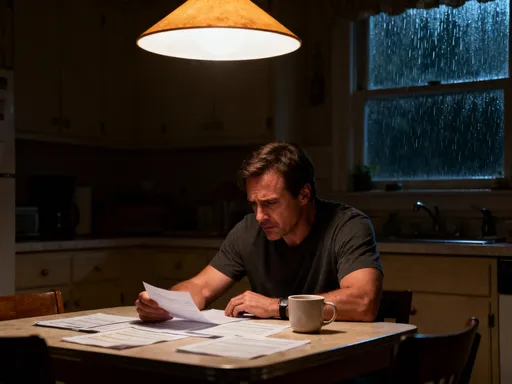
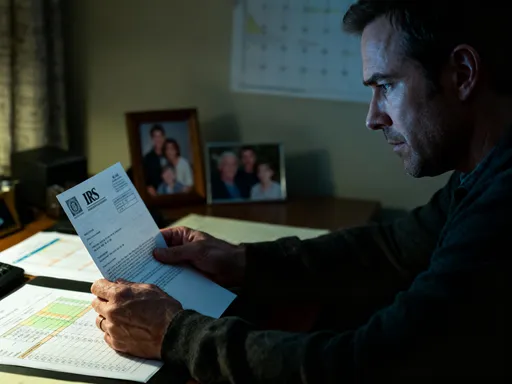
Then came the second blow, less dramatic but more destabilizing. I worked in a specialized role at a mid-sized company, believing my position was secure due to my experience and performance. When the industry shifted and the company downsized, I was among those let go. Because I had structured my monthly expenses around that income—with a mortgage, private school tuition for my children, and a few standing subscriptions—I found myself in a cash crunch within three months. Emergency savings helped, but they were designed to cover three months of expenses, not nine. The overlap of job loss and investment loss created a period of real financial anxiety, one that lasted longer than I care to admit. It was during those sleepless nights that I realized I had never truly assessed my risk exposure. I had assumed stability, not built resilience.
What made this wake-up call so powerful wasn’t just the monetary loss, but the emotional toll. I felt embarrassed, even though no one but close family knew the full extent. I questioned whether I was cut out for managing my own finances. But slowly, frustration turned into curiosity. Why hadn’t standard financial advice—“save 15%,” “invest in index funds,” “avoid debt”—prepared me for these very real shocks? I began to see that while those principles are sound, they often miss the deeper work of personal risk assessment. They assume a level of stability and predictability that many of us don’t actually have. My experience wasn’t unique. Plenty of people follow the rules and still get knocked off course. The missing piece, I realized, wasn’t more saving or smarter investing—it was a structured way to identify, measure, and respond to the risks specific to my life.
What Risk Assessment Really Means (And What It Doesn’t)
One of the first things I learned in my journey was to redefine what risk assessment actually means. I used to think it was about avoiding danger at all costs—like trying to build a life where nothing could go wrong. That’s not only impossible, it’s counterproductive. Avoiding all risk means avoiding growth, opportunity, and progress. Instead, I came to understand that risk assessment is not about elimination, but about awareness and intention. It’s the practice of asking: What could go wrong? How likely is it? And if it does happen, can I handle it? This shift in mindset—from fear to foresight—changed everything.
A common misconception is equating risk with loss. In reality, risk is simply uncertainty about outcomes. Every financial decision carries risk, including the decision to do nothing. For example, keeping all your savings in a regular checking account avoids market volatility, but it exposes you to inflation risk—the slow erosion of purchasing power over time. Similarly, paying off a mortgage early might feel like a win, but it could mean missing out on higher investment returns or leaving yourself short on liquid funds during an emergency. The goal of risk assessment isn’t to make perfectly safe choices, but to make informed ones. It’s about aligning your financial actions with your actual tolerance for uncertainty and your long-term goals.
Another myth I had to unlearn was that risk assessment is only for wealthy investors or finance professionals. In truth, it’s even more critical for those with limited margins. When you have fewer resources, a single setback can have a disproportionate impact. That’s why understanding your personal risk landscape isn’t a luxury—it’s a necessity. I began to see risk not as an obstacle, but as information. The more I understood about my vulnerabilities, the better I could plan around them. This didn’t make me more cautious; it made me more confident. I stopped reacting to market headlines and started responding to my own financial reality. Risk assessment became less about predicting the future and more about preparing for a range of possibilities.
Mapping Your Risk Terrain: Where Are You Most Exposed?
Once I accepted the importance of risk assessment, the next step was to map out my own risk terrain. This meant taking a hard, honest look at every part of my financial life. I started with income. How stable was my job? Was I dependent on a single employer, industry, or client? I realized that my expertise, while valuable, was highly specialized and tied to a niche market. If demand in that sector declined, my earning power could drop quickly. I also had no side income—no freelance work, no passive revenue streams. That meant my financial engine had only one cylinder. Any disruption to that one source would stall everything.
Next, I examined my debt structure. I had a mortgage, a car loan, and some credit card balances I paid off monthly. On the surface, this looked manageable. But when I stress-tested it, I saw vulnerabilities. The mortgage payment consumed nearly 30% of my gross income, which is within conventional guidelines, but that didn’t account for other fixed costs. If my income dropped by even 20%, I’d be stretching to cover essentials. I also realized that my emergency fund, while better than nothing, wasn’t aligned with my actual risk exposure. It covered three months of expenses, but not the full cost of a prolonged job search, which could easily take six months or more in my field.
Investment concentration was another blind spot. After the failed business venture, I pulled back and put most of my remaining investments into a single target-date retirement fund. While diversified within the fund, this created overreliance on one vehicle. If the fund underperformed or if I needed to withdraw funds during a market downturn, I’d have limited flexibility. I also hadn’t considered how my investments aligned with my risk tolerance. Were they aggressive because I wanted growth, or because I hadn’t thought deeply about the downside? Lifestyle inflation was another hidden risk. Over the years, as my income increased, so did my spending—on home upgrades, vacations, and convenience services. I hadn’t paused to ask whether these upgrades were sustainable if income ever dropped. Mapping these exposures wasn’t about assigning blame, but about gaining clarity. For the first time, I could see not just my balance sheet, but my risk sheet.
The Tools That Actually Help (No Fancy Software Needed)
Armed with a clearer picture of my risks, I needed practical tools to manage them. I avoided complex financial models or expensive software. What I found most useful were simple, repeatable methods that fit into real life. One of the most effective was scenario planning. I began asking myself, “What if?” in a structured way. What if I lost my job tomorrow? What if the market dropped 30%? What if a major medical expense came up? For each scenario, I outlined the immediate financial impact and my potential response. This wasn’t about predicting the future, but about reducing panic in the moment. When you’ve already thought through a crisis, you’re less likely to make rash decisions.
Another tool I adopted was portfolio stress-testing. Instead of just looking at past performance, I projected how my investments would hold up under different conditions. For example, I reviewed how my mix of stocks, bonds, and cash would perform if interest rates rose or if inflation spiked. I didn’t need advanced software—just a spreadsheet and some historical data. This helped me see that while my portfolio wasn’t overly aggressive, it lacked resilience in certain environments. I adjusted by adding more short-term bonds and increasing my cash allocation slightly, not to chase returns, but to improve stability.
Simple checklists also became part of my routine. Before making any financial decision—big or small—I ran through a short list of questions: Does this align with my long-term goals? What’s the worst-case scenario? Do I have a backup plan? How will this affect my emergency fund? These questions took less than two minutes but prevented me from repeating past mistakes. I also started scheduling quarterly financial reviews, where I revisited my risk map and updated it as my life changed. These tools weren’t flashy, but they were effective. They turned risk management from an abstract idea into a daily practice.
Balancing Risk and Reward Without Guessing
One of the hardest lessons was learning to balance risk and reward without letting emotion take over. It’s easy to get excited about high-return opportunities or paralyzed by fear of loss. I found that the key was to separate emotional reactions from rational evaluation. I began using a simple framework: for every potential investment or financial move, I wrote down the potential upside, the potential downside, and my ability to absorb that downside. This forced me to confront reality, not optimism.
For example, when a friend invited me to join a real estate partnership, I was tempted. The projected annual return was over 12%, far higher than the stock market average. But when I listed the risks—property vacancies, maintenance costs, market downturns, partnership disputes—I realized that a loss could wipe out a year’s worth of savings. More importantly, I couldn’t access the money for five years. Given my income uncertainty, that level of illiquidity was too risky. I declined, not because the opportunity was bad, but because it didn’t fit my personal risk profile. This wasn’t about being risk-averse; it was about being risk-aware.
I also restructured my investments to better match my life stage. In my 40s, with children approaching college age and aging parents to consider, I shifted toward more balanced allocations. I increased my bond holdings, diversified into international funds, and added a small allocation to real estate investment trusts (REITs) for inflation protection. I didn’t eliminate stocks, but I reduced exposure to high-growth, high-volatility sectors. This wasn’t about maximizing returns—it was about preserving capital while still allowing for growth. Balancing risk and reward became less about guessing and more about aligning my portfolio with my real life.
Building Habits That Keep Risk in Check
Managing risk isn’t a one-time project. It’s an ongoing discipline. I’ve built several habits that help me stay consistent. The first is the quarterly financial review. Every three months, I set aside time to look at my income, expenses, investments, and emergency fund. I update my risk map and ask whether any new vulnerabilities have emerged. This might sound tedious, but it’s like a routine health check-up—small efforts that prevent big problems.
Another habit is using mental filters for new opportunities. When I hear about a hot stock, a side hustle, or a “can’t-miss” deal, I don’t react immediately. I wait 48 hours and then apply my checklist. This pause eliminates impulse decisions and gives me time to research. I’ve also set personal red lines—non-negotiable rules like “never invest more than 10% of my portfolio in a single opportunity” or “never take on new debt without a clear payoff timeline.” These rules aren’t rigid, but they provide guardrails when emotions run high.
Finally, I’ve learned to recognize when external noise—like market swings or social media trends—tries to pull me off course. Instead of reacting to headlines, I return to my plan. I remind myself that my goal isn’t to outperform the market every year, but to protect what I’ve built and grow it steadily over time. These habits don’t guarantee success, but they reduce the chance of failure. They turn risk management from a chore into a quiet, consistent practice that supports long-term stability.
Why This Isn’t Just About Money—It’s About Freedom
In the end, what I’ve gained from learning to manage risk isn’t just a stronger portfolio—it’s peace of mind. Knowing that I’ve thought through potential setbacks, built buffers, and aligned my choices with my true priorities has given me a sense of control I didn’t have before. I no longer lie awake wondering what might go wrong. Instead, I feel prepared for whatever comes. This isn’t pessimism; it’s empowerment. By facing risk head-on, I’ve reduced its power over me.
And that freedom extends beyond finances. It affects how I make decisions in other areas of life—whether to take on a new project, support my children’s ambitions, or plan for retirement. I’m more willing to take thoughtful risks because I know I have a foundation to fall back on. I’m not reckless, but I’m no longer paralyzed by fear. Managing risk has become the quiet engine of my growth, not a barrier to it. It’s allowed me to move forward with confidence, not just hope.
For anyone who’s ever felt overwhelmed by financial uncertainty, I offer this: you don’t need to be an expert to get started. You just need to be honest with yourself. Take a clear look at where you’re exposed. Use simple tools to plan for the unexpected. Build habits that keep you on track. Risk will never disappear, but it doesn’t have to control you. When you learn to see it clearly, prepare for it, and respond to it wisely, you’re not just protecting your money—you’re building a life of greater resilience, clarity, and freedom. That’s the real reward of getting smart about risk.